Procurement Strategy:
Used Racking vs. New Racking Cost-Benefit Analysis for Growing Warehouses
Comparing used vs new racking cost is one of the first decisions a procurement team faces when planning a warehouse expansion. The answer isn’t just “used is cheaper” — it depends on your capital budget, timeline, and how long you plan to use the space. (If you’re still deciding between used and new racking altogether, start with our complete buyer’s guide.) This analysis breaks down the real cost-benefit differences to help procurement managers and growing businesses make the right call.
The Capital Expenditure Difference
Used racking typically costs 30–50% less than new racking of the same type and load capacity. For a growing warehouse, this difference directly affects how much capital is available for other priorities — inventory, staffing, or additional equipment — rather than being tied up in racking infrastructure.
A Practical Cost Example
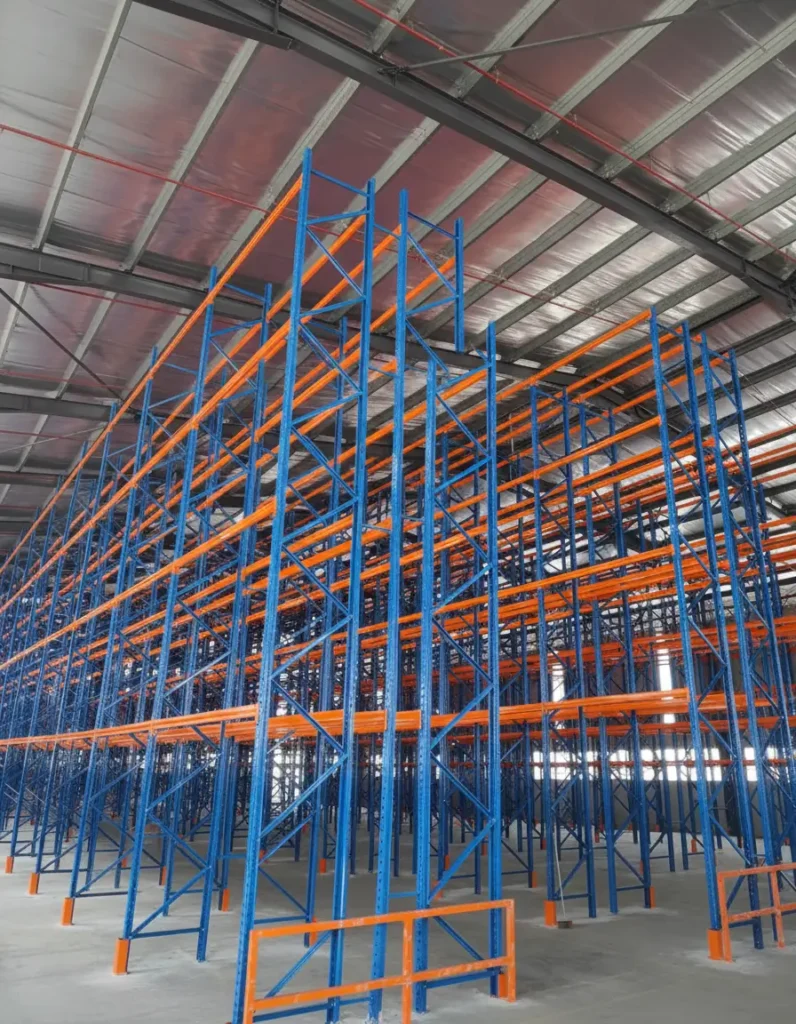
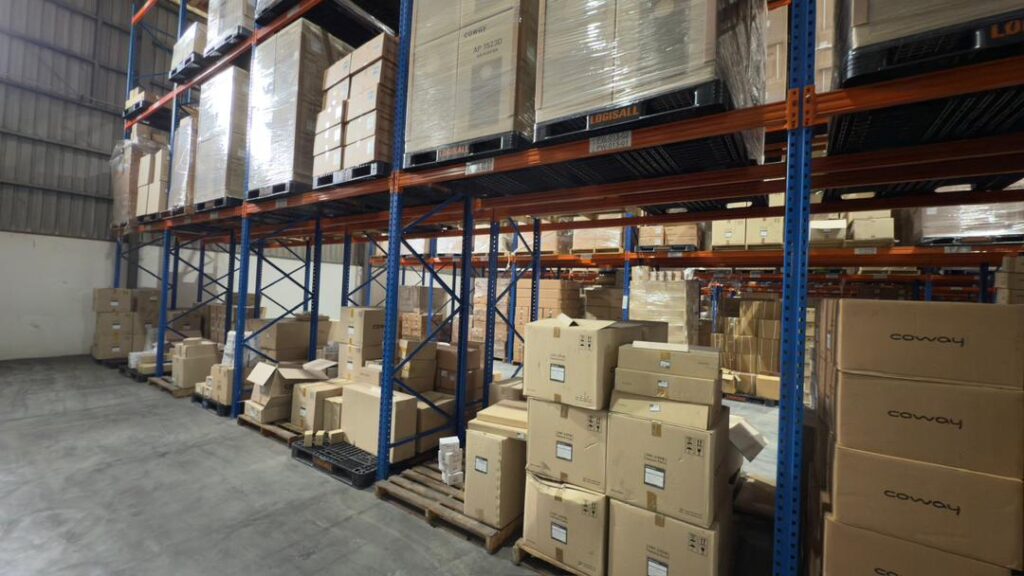
Consider a warehouse expansion requiring 20 bays of heavy duty pallet racking (1000–3000KG per level):
- New racking: Typically involves higher upfront cost plus a manufacturing lead time of several weeks before installation can begin.
- Used racking: Available at roughly half the capital cost, with immediate delivery or self-collection — meaning the warehouse can be operational significantly sooner.
For a business scaling quickly, the combination of lower cost and faster availability often matters more than the discount alone — delayed racking means delayed inventory capacity, which has its own cost in lost operational time.
Where the ROI Case Gets Stronger
Used racking makes the strongest financial case when:
- You’re scaling quickly and can’t afford to wait weeks for new racking to be manufactured. (If you’re relocating rather than scaling, see our liquidation and relocation guide instead.)
- Your storage needs may change — used racking preserves capital that would otherwise be locked into a long-term new-equipment purchase
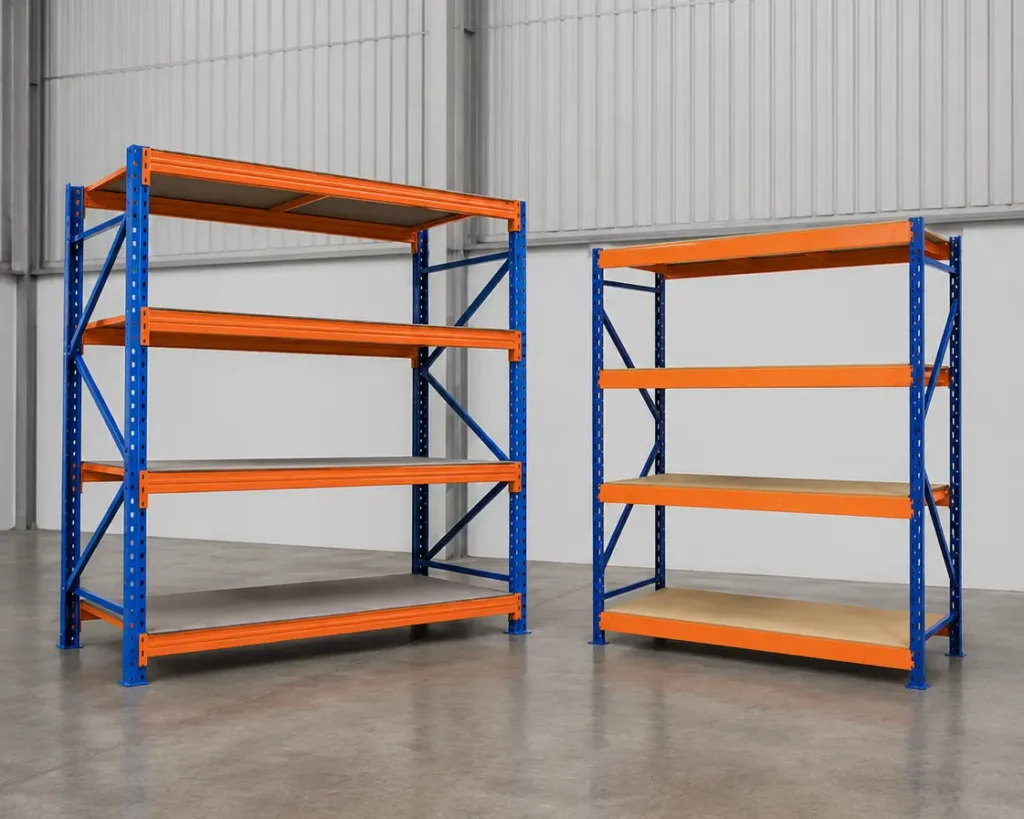
- You’re combining multiple rack types (boltless, longspan, heavy duty) into one warehouse — buying all of it used compounds the savings across your entire setup
- Structural inspection is properly verified — the cost savings only make sense if the racking meets the same safety standard as new
When New Racking May Still Make Sense
To keep this analysis balanced: new racking is worth considering when you need highly specific customization (non-standard dimensions, unique configurations), or when a formal manufacturer warranty is a procurement requirement for your business. For most standard warehouse, retail, and light industrial storage needs, however, properly inspected used racking meets the same functional and safety requirements at a lower cost.
Planning a Mixed Warehouse Racking System
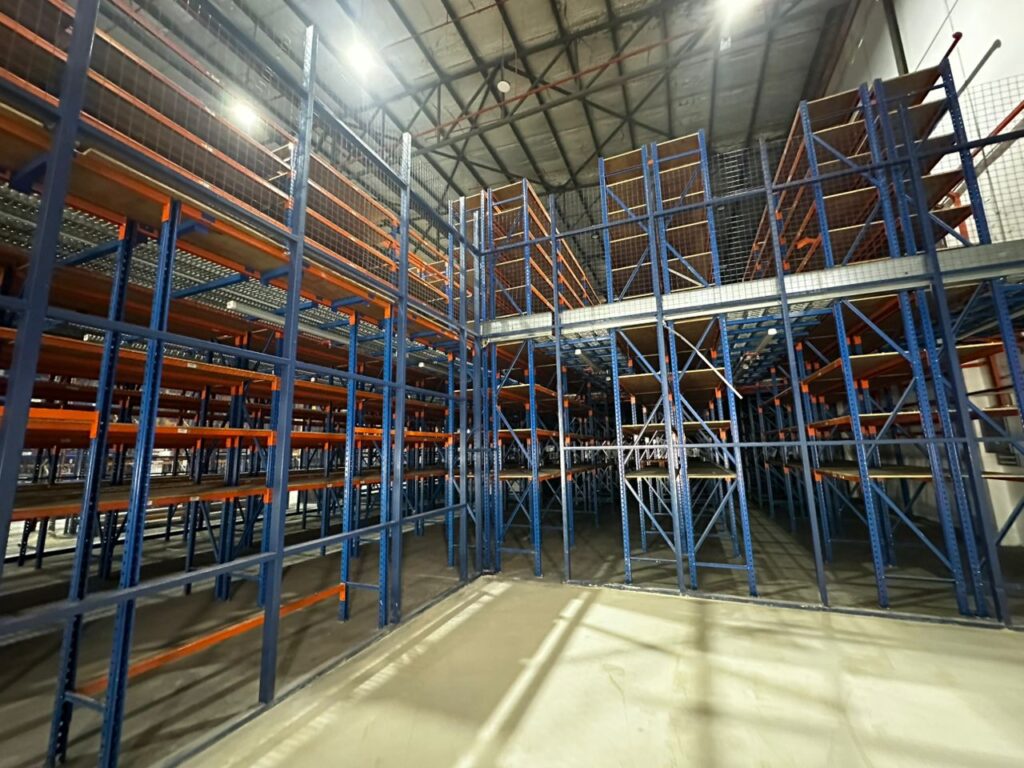
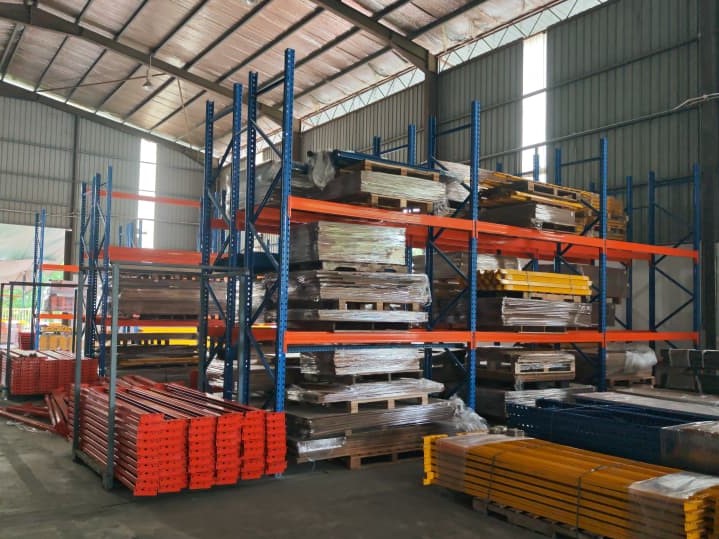
Most warehouses don’t use a single rack type — they combine heavy duty racking for palletised storage, longspan shelving for hand-stacked goods, and boltless racking for lighter storage needs. Buying this combination used, through a complete warehouse racking system, compounds the cost savings across your entire setup while keeping one supplier accountable for consistent inspection standards.
Frequently Asked Questions
Get a Cost Comparison for Your Warehouse
Ready to see the numbers for your specific setup? Browse our current stock of inspected used racking, or contact us with your space and load requirements for a same-day quote comparing your options.