Best Racking Systems for E-Commerce Fulfillment Warehouses in Malaysia
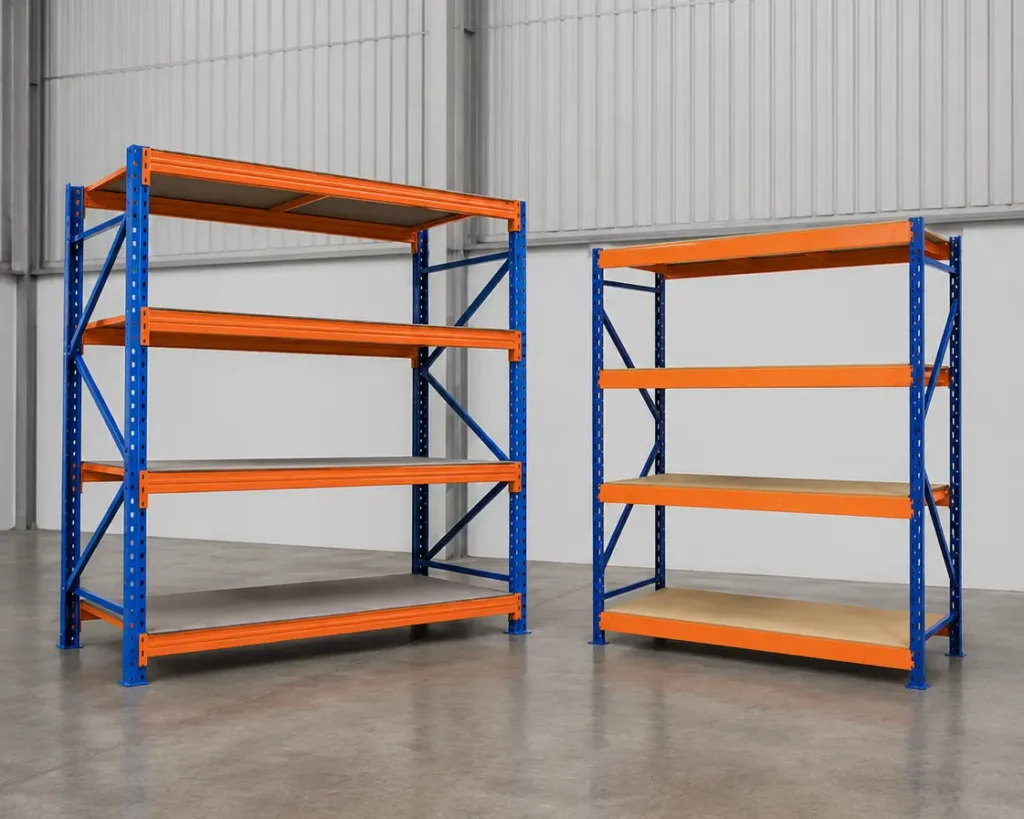
E-commerce fulfillment warehouses generally need a different racking mix than bulk manufacturing or FMCG storage. Because e-commerce operations handle many SKUs in smaller quantities with frequent picking, boltless racks and medium duty (longspan) racking are usually the better fit for pick-face storage, while heavy duty pallet racking still has a role for bulk reserve stock. The right mix depends on your order profile, not a single “best” rack type.
Why E-Commerce Warehousing Needs a Different Racking Approach
Traditional palletised warehousing (FMCG distribution, manufacturing raw materials) is built around bulk quantities of fewer SKUs, moved by forklift, with less frequent access per pallet. E-commerce fulfillment is the opposite in several ways:
- Many SKUs, smaller unit counts per SKU — a single order might pull from 5–10 different shelf locations, not one pallet.
- Frequent picking, often by hand or with hand trucks/trolleys rather than forklifts for pick-face zones.
- Space efficiency matters more than raw load capacity for the majority of your storage — most e-commerce parcels don’t require 2000–3000KG UDL shelving.
- Layout needs to support reconfiguration as SKU count and seasonal stock levels change.
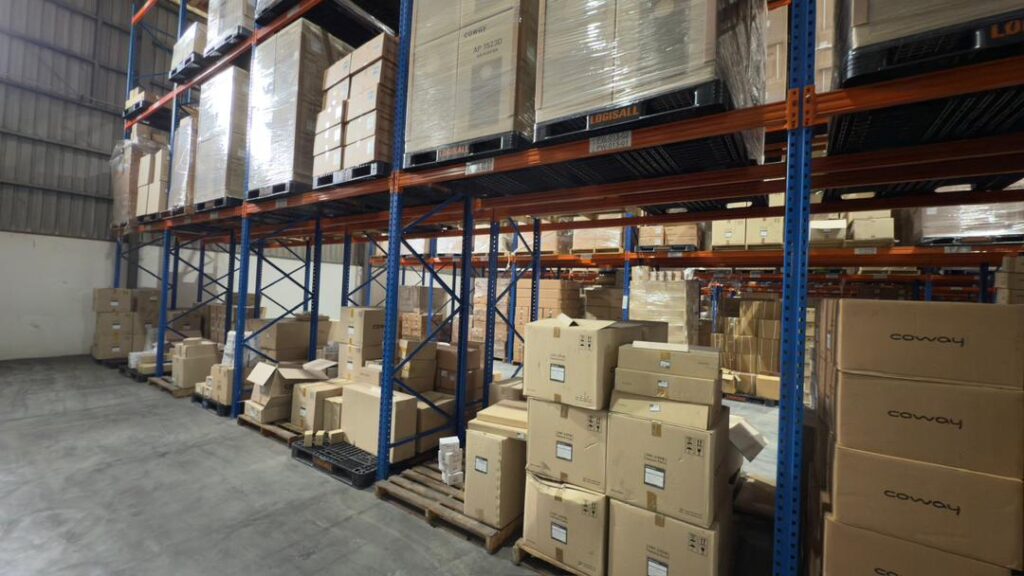
This doesn’t mean heavy duty rack has no place — bulk reserve stock (inbound pallets waiting to be broken down into pick locations) still benefits from palletised storage. The point is matching the rack type to the zone, not defaulting to one system for the whole warehouse.
Choosing the Right Rack Type for E-Commerce Fulfillment
Which racking system is best for e-commerce fulfillment centers?
It depends on the zone: boltless or medium duty racking usually suits pick-face and small-parcel storage, while heavy duty pallet racking suits bulk reserve stock before breakdown. Most fulfillment warehouses in Malaysia end up using a combination rather than a single rack type throughout.
- You’re storing palletised goods that require forklift loading and unloading
- Your inventory involves loads over 500KG per level
- You need SIRIM-certified structural safety for industrial compliance. See our full safety inspection checklist for what to verify before buying.
- Your warehouse operates with high-density vertical storage (up to 7500mm height)
Practical Considerations for E-Commerce Warehouses in Malaysia
Can You Use Both in the Same Warehouse?
- Scaling speed matters. E-commerce demand can spike quickly around seasonal sale periods. Because used racking is inspected and ready stock, it avoids the manufacturing lead times that come with ordering new racking to spec — useful when you need to expand storage capacity on a shorter timeline.
- Budget efficiency matters for thin-margin operations. Many e-commerce and dropship-adjacent businesses operate on tighter margins than traditional distributors. The 30–50% typical cost saving of used vs new racking (see our cost-benefit analysis) can matter more here than in capital-heavy manufacturing setups.
- Aisle width depends on your picking method. If your team uses hand trucks or trolleys for pick-face zones rather than forklifts, your aisle spacing and rack depth requirements differ from a forklift-only bulk storage layout. This is worth confirming during a site visit rather than assuming standard forklift clearances throughout.
- Layout flexibility supports growth. If your SKU count or order volume is still growing, favour rack configurations (like boltless) that can be reconfigured without needing a full re-fit later.
Common Mistakes E-Commerce Businesses Make When Choosing Racking
- Defaulting to heavy duty rack for everything. If most of your storage is small parcels, this often wastes both space efficiency and budget on load capacity you don’t need.
- Not separating pick-face from reserve storage. Mixing the two without a clear zone plan slows down picking as SKU count grows.
- Skipping a site measurement. Aisle width, ceiling height, and column spacing all affect what configuration actually fits — guessing from a floor plan alone can lead to costly rework.
- Overlooking inspection standards on used stock. Since fulfillment racking is handled frequently, structural condition matters as much as (or more than) in low-traffic bulk storage. See our Safety Inspection Checklist.
How to Plan Your E-Commerce Racking Layout
- Map your SKU profile — rough size, weight, and quantity per SKU category.
- Separate pick-face zones from reserve/bulk zones conceptually before choosing rack types for each.
- Get a site measurement to confirm what actually fits your ceiling height, aisle width, and floor layout.
- Check current Ready Stock if you need racking for near-term expansion.
- Request a quote with your rack type mix, quantity, and timeline for the most accurate pricing.
Frequently Asked Questions